
Things That Would Make You Visible. But You're Not Capturing Them.
Apr 27, 2026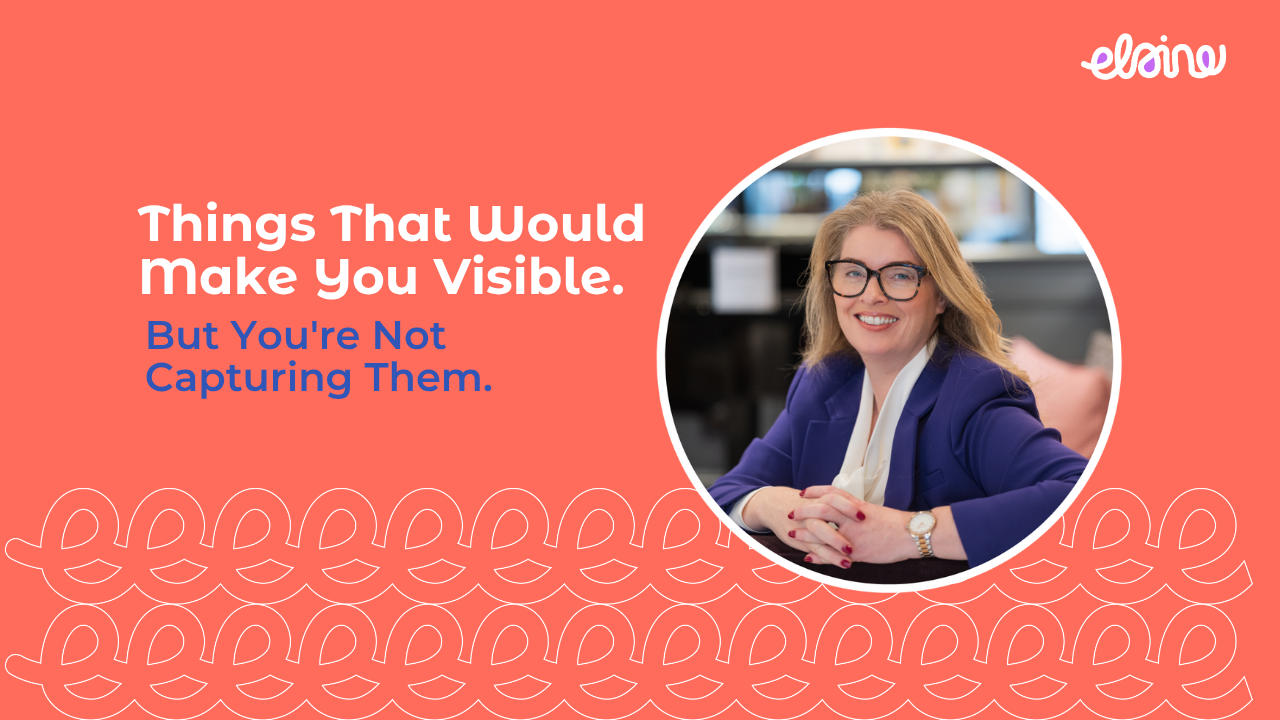
You're about to step into a new context. New market. New network. A new room full of people who don't know you yet. You know visibility would help - that arriving with some presence already established would make every conversation easier, every introduction warmer, every opportunity more likely to land.
But you're stuck.
On one side, you've watched what happens when senior people get visibility wrong. The executive whose content got so polished, so constructed, so devoid of anything human that it stopped sounding like them entirely. You don't want that.
On the other side, there's your schedule. You're already running at capacity. Closing deals. Managing boards. Flying between cities. The idea of adding content creation to that list feels somewhere between laughable and irresponsible.
So you do what most senior leaders do. You go quiet personally, push more activity through the business account, and tell yourself you'll sort the visibility thing when things calm down.
Things don't calm down. And in the meantime, you're leaving cash on the table.
Being Seen Is Not The Same As Being Known
Most leaders at this level have some degree of visibility. A LinkedIn profile. A company page that gets updated. The occasional post when something significant happens. You're not invisible.
But visible and known are two entirely different things.
Known means that when the right person looks you up - an investor, a potential partner, an acquirer - they come away with a clear sense of who you are, how you think, and why you matter. They feel like they've already met you before they've met you.
Visible just means you showed up.
At £5M or £10M, you are the brand. Not just for customers - for everyone deciding whether to bet on you. And those people are watching far more than they're engaging. They read without liking. They observe without commenting. They form views about who you are based on what they find.
A company page tells them about the business. Your personal presence tells them about the leader. And it's the leader they're ultimately backing.
When that presence is thin or generic, they fill the gap themselves. Usually conservatively.
Going Silent Is More Expensive Than You Think
Here's what I see happen all the time. A senior leader gets busy - genuinely, legitimately busy - and their personal visibility is the first thing that gets dropped. The business account keeps ticking. The team keeps posting. But the leader goes quiet.
And the longer you're quiet, the harder it becomes to come back.
Think of it like media presence. When you go silent, you don't just pause - you start losing ground. And when you eventually need to show up - because a deal is happening, because you're moving into a new market, because something significant is on the horizon - you have to use enormous energy just to get back to where you were. Whereas if you'd kept even a minimal presence going, one considered post every couple of weeks, you wouldn't be starting from scratch.
You're better off saying one thing every two weeks than saying nothing for six months and then everything at once when you need people to pay attention.
Unless you're the pope, you don't get to disappear and expect the room to be waiting for you when you return.
A Quick Word On AI - Because I Think The Reaction To It Is Wrong
Recently, one of my clients drew my attention to a news article criticising a high profile executive for using AI to produce her LinkedIn content. Her post was held up as evidence of inauthenticity. A failure of leadership communication. Career-limiting, apparently.
Here's what I actually think.
The mistake wasn't using AI. The mistake was not knowing your own voice clearly enough to recognise when it had been replaced. And ensuring that you add your perspective.
A leader with a genuinely demanding schedule, genuinely in rooms worth writing about, who uses a tool to help them get something out there? That's not laziness. That's a reasonable response to an unreasonable set of demands on your time.
The failure is producing something so scrubbed of any real perspective that the reader finishes it and knows nothing more about you than when they started. That can happen with AI. It can also happen without it. I've read plenty of human-written content that tells me absolutely nothing about the person who wrote it.
Own the tool if it helps you. Say yes of course I use Ai to produce my content but I also add my voice and my perspective to make it valuable to my audience.
The Raw Material Is Already There
Here's what surprises most of the leaders I work with. They think becoming more visible means creating something new. Finding time they don't have to produce content they're not sure how to write.
It doesn't. Not at this level.
The meeting where you reframed a problem and watched the whole room shift. The decision that felt counterintuitive but proved right. The observation from a trip that captured something true about how you lead or how your industry works.
These things are happening constantly. You're just not capturing them.
That's the actual work. Not creating from scratch - capturing what's already real, shaping it into something that reflects how you actually think, and making it visible in a way that the right people will find meaningful.
One piece of content with genuine weight will do more for your positioning than a month of safe, forgettable output. And it doesn't have to take over your life to get there.
What I Do - And Why It's Different
Most people who work in this space come at it from communications. PR. HR. Brand.
I come at it from outcomes.
When I work with a senior leader on their visibility, I'm not starting with their content. I'm starting with what they're trying to achieve - the deal, the raise, the move into a new market, the next significant chapter. Everything we build works backwards from there.
That's a different conversation. And for leaders operating at your level, it's the only one worth having.
The capability is already there. The track record is already there. What hasn't kept pace is how you're understood - by the people who could back you, open doors for you, or bring you the kind of opportunity that doesn't get advertised.
My job is not to make you more visible. My job is to make sure you're recognised for the level you're already operating at. When that happens, things shift in ways that are very tangible. The right conversations start finding you. You walk into rooms already known. Opportunities that used to require a long explanation of who you are, start arriving pre-qualified.
That's not a visibility strategy. That's what happens when your presence finally catches up with your capability.
The gap between how you operate and how you're perceived is costing you more than you think.
Not in ways that are always obvious. But in the conversations that don't happen, the opportunities that go to someone with a lower ceiling but a clearer presence, and the rooms you walk into having to explain yourself, when you shouldn't have to.
If you've read this far, you already know this applies to you.
Book a call by clicking here, or reach out to my team at hello@elainewalshmcgrath.com
Stay connected with news and updates!
Join our mailing list to receive the latest news and updates from our team.
Don't worry, your information will not be shared.
I hate SPAM. I will never sell your information, for any reason.
